How to choose enterprise cloud storage? Start with the pricing model: per-seat vs annual flat fee
Written in 2026/11/05On an enterprise cloud storage quote, “per person per month” always looks cheap. The real price only shows when you multiply by headcount. Ten people, thirty people, fifty people — that small monthly number can turn into several times itself over a year. The more common outcome is worse: to save on account fees, the company just has everyone share one account — and what happens with a shared account when an employee leaves is something we've covered in An employee has left — what happens to the files in the shared account?.
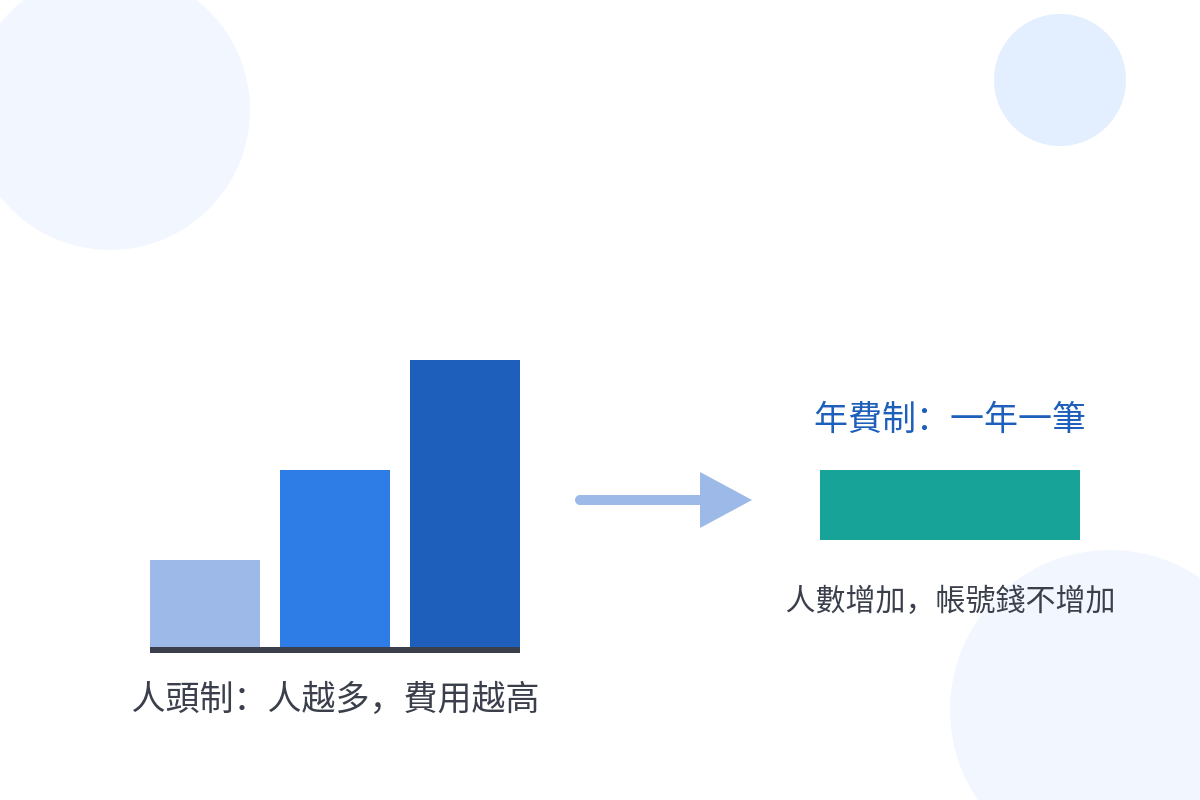
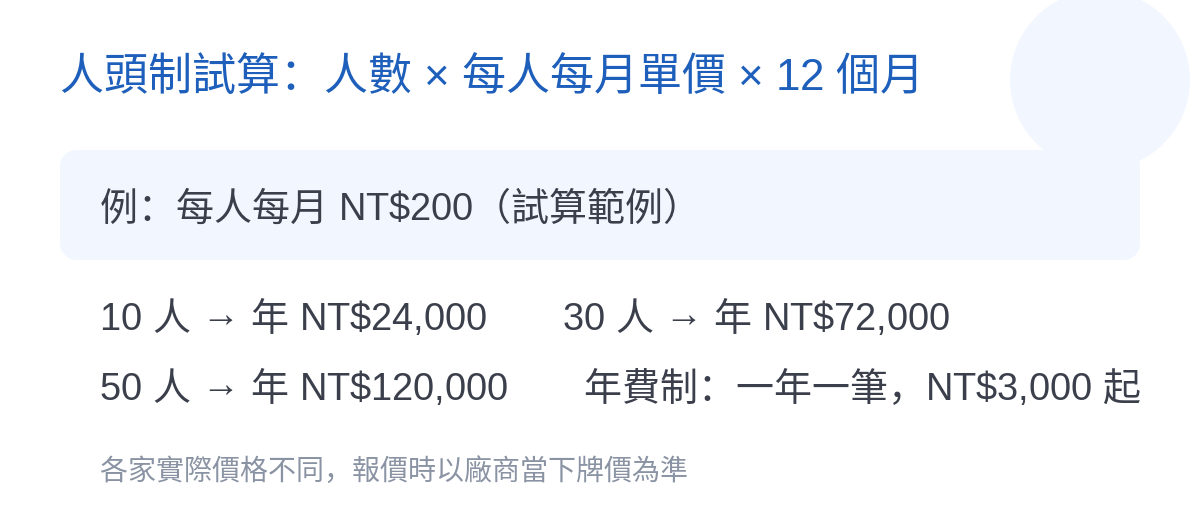
1. How per-seat pricing works: headcount × unit price × 12 months. Just run one number — suppose NT$200 per person per month (a worked example only; actual prices vary by vendor, so check current price lists when quoting): 10 people = NT$24,000 a year, 30 people = NT$72,000, 50 people = NT$120,000. Headcount rises and costs rise with it; part-timers, temps, new hires — every extra account is more money, and the budget must be recalculated every time people change.
2. How annual flat-fee pricing works: one payment a year, unlimited people. CloudFiles is annual-fee based, from NT$3,000 with unlimited users — 10 people pay this, 50 people pay the same for accounts; opening more accounts costs nothing extra. Budget once, and next year doesn't get recalculated because headcount moved; giving temps and part-timers their own accounts doesn't require doing the account maths first.
3. Price alone misses three things. First, account flexibility: can temps have their own accounts, or must they share? The account money saved by sharing is often paid back all at once during offboarding — we discussed that trade-off in Can our team share one Google Drive account? Second, permissions and records: does everyone have a dedicated account, can folder permissions be separated, can access logs be kept per person and for five years. Third, capacity and transfer: what's the single-file limit, does a dropped connection resume, can client shares be set view-only.
CloudFiles on these three: unlimited dedicated accounts, separated folder permissions, access logs kept five years and recorded to the person; single files up to 5GB with resume, and shares can be set read-only. These aren't add-ons — they're premises that only become possible once the pricing model changes: under per-seat pricing every dedicated account costs money, so companies can't resist sharing; under annual flat pricing dedicated accounts are free, so permissions can truly follow the person.
4. But honesty first: annual flat-fee isn't right for everyone. If your company is three to five people and you want a whole suite of mail, documents and meetings, a per-seat suite may be better value — because you're buying more than a place to put files. CloudFiles is a dedicated file storage and exchange service, not an office suite. Be clear first: are you buying a place to store and send files, or an entire office? The former — look at the pricing model; the latter — look at the suite contents.
Before deciding, calculate three numbers: how many people now, expected in a year, and how many temps will need accounts during the year. Plug the three numbers into the per-seat formula and compare with the annual flat fee — which is cheaper and which budget is stabler becomes obvious. If flat-fee wins, start with one department.
CloudFiles offers a one-month free trial, annual fee, unlimited users. During the trial, open dedicated accounts for every colleague, set folder permissions, run one month on your company's real headcount — and stop guessing at the bill.